
Riding a motorcycle represents far more than simply operating a vehicle. It’s a complex interplay of physical skill, mental awareness, mechanical knowledge, and risk management that demands continuous learning and adaptation. Whether you’re considering your first bike or have years of experience, the depth of knowledge required to ride safely and confidently extends across technical riding skills, defensive strategies, legal protections, and cultural understanding.
The difference between a competent rider and a truly skilled one often lies not in throttle control or cornering speed, but in the invisible work of hazard prediction, strategic positioning, and informed decision-making. This knowledge ecosystem encompasses everything from the physics of counter-steering to the nuances of insurance deductibles, from reading oil stains at intersections to understanding the unwritten rules of motorcycle culture. What follows is a comprehensive exploration of the essential domains every rider should understand to ride smarter, safer, and with greater confidence.
The foundation of motorcycle safety isn’t found in protective gear or ABS brakes—it’s built on a fundamental shift in mindset. Unlike car drivers who can rely on crumple zones and airbags, motorcyclists must adopt what experienced riders call a survival mindset: the assumption that you are invisible to other drivers and that every vehicle represents a potential threat.
This defensive approach manifests in specific, learnable techniques. Proper positioning at intersections means staying visible and maintaining escape routes, never boxing yourself in between vehicles. Effective scanning involves a continuous pattern of mirror checks, head turns, and forward visual sweeps that create a 360-degree awareness bubble. Reading driver behavior cues—a front wheel beginning to turn, a head visible in a side mirror, brake lights flickering—allows you to predict hazards several seconds before they materialize.
Strategic use of your horn and high-beam flash serves as active communication tools, not expressions of frustration. Similarly, understanding the dangerous myth of “right of way” is crucial: you may legally have priority, but a collision will injure you regardless of fault. The skilled rider knows when to assert their position and when to yield, prioritizing survival over principle. This cognitive framework transforms riding from reactive crisis management into proactive risk mitigation.
Technical riding skills form the mechanical foundation of safe motorcycling. Understanding the physics of counter-steering—pushing the handlebar in the direction you want to turn—often represents a revelation for intermediate riders who’ve been unconsciously doing it but don’t understand why it works. This principle governs all turns above approximately 10-12 mph and becomes critical for emergency swerves.
Successful cornering combines vision, body position, and throttle control. Your eyes should focus on the exit point, not the immediate pavement ahead. This visual discipline directly combats target fixation—the dangerous phenomenon where riders steer toward whatever they’re looking at, whether that’s an obstacle, the edge of the road, or oncoming traffic. The solution is deceptively simple but requires conscious practice: look where you want to go, and the bike will follow.
Effective braking technique represents one of the most important survivable skills. Progressive braking involves gradually increasing pressure on both levers, loading the front suspension before applying maximum force. This approach prevents wheel lock-up and maintains stability. The rear brake, often underutilized, provides 20-30% of stopping power and crucial stability during slow-speed maneuvers. Understanding your reaction time lag—typically 0.7 to 1.5 seconds between perceiving a threat and beginning to brake—emphasizes why following distance and early hazard recognition matter so critically.
Experienced riders develop an almost intuitive ability to read road surfaces, identifying threats that car drivers never notice. This skill set involves both visual recognition and understanding how different surface conditions affect traction.
Common hazards requiring specific techniques include:
The key to managing these hazards lies in early identification and smooth inputs. Sudden braking or aggressive steering on compromised surfaces can break traction instantly. Veteran riders develop a visual scanning pattern that continuously assesses surface texture, color variations, and suspicious shine—all while maintaining awareness of surrounding traffic. When encountering unavoidable hazards like grooved pavement, maintaining a relaxed grip allows the bike to track naturally rather than fighting its movement.
City riding presents unique challenges that demand both technical skill and strategic thinking. Lane positioning becomes a dynamic calculation based on visibility, escape routes, and traffic flow patterns. The dominant lane position typically sits in the left tire track of your lane, maximizing visibility to oncoming traffic while avoiding the oil-slicked center strip.
Filtering and lane splitting, where legal, require heightened awareness and speed management. The practice offers significant safety benefits by removing riders from rear-end collision zones, but only when executed with appropriate caution. Acceptable speed differentials, mirror clearance, and reading driver behavior become critical micro-skills. Similarly, merging onto highways demands smooth acceleration and precise gap judgment—hesitation in the merge lane creates more danger than confident, decisive entry.
Multi-lane navigation involves understanding which lanes attract the most aggressive drivers, where vehicles commonly drift, and how to position yourself to remain visible to the maximum number of drivers. Turn lane usage, seemingly simple, actually requires strategic timing to avoid being trapped alongside vehicles whose drivers may not have checked their mirrors.
Motorcycle insurance extends far beyond basic liability coverage, yet many riders remain underinsured because they don’t understand available options or how bike-specific factors affect premiums.
Premium calculations vary dramatically based on motorcycle type. Sportbikes, particularly liter-class machines, often cost two to three times more to insure than equivalent-value cruisers or adventure bikes due to statistical risk profiles. Naked bikes, despite sometimes lower purchase prices, can incur higher theft rates for exposed components, affecting comprehensive coverage costs. Modified motorcycles require special disclosure and often additional premium, but failing to report modifications can void coverage entirely.
Deductible optimization offers one of the most effective ways to manage insurance costs. Higher deductibles significantly reduce premiums, making them logical for experienced riders with older bikes. Some insurers offer vanishing deductibles that decrease annually without claims. Storage insurance for seasonal riders provides liability-only coverage during winter months at reduced cost.
Often-overlooked coverage options include:
Despite best efforts, accidents occur. Understanding the recovery process—both physical and financial—helps riders navigate the aftermath more effectively. Immediate post-accident documentation proves crucial: photograph injuries, gear damage, and the scene from multiple angles. Road rash care, often underestimated by medical professionals unfamiliar with motorcycle injuries, requires specific treatment to prevent infection and minimize scarring.
Insurance claims for injuries involve several components riders often undervalue. Lost wages extend beyond immediate recovery to include diminished earning capacity if injuries cause long-term limitations. Rehabilitation costs can accumulate over months or years. Quantifying pain and suffering requires thorough documentation of how injuries affect daily life. Understanding these elements before an accident occurs allows riders to maintain appropriate coverage limits and recognize when legal representation becomes necessary.
Ownership decisions regarding parts and maintenance carry implications beyond immediate function. The choice between OEM (Original Equipment Manufacturer) and aftermarket parts involves tradeoffs between cost, warranty protection, and resale value. Installing non-OEM parts during the warranty period can void coverage for related failures, even if the aftermarket part wasn’t the cause. However, this same modification might improve performance or aesthetics.
Resale value calculations reveal that motorcycles with complete service records and OEM parts typically command 10-15% premiums over equivalent modified bikes. Yet this consideration matters less for riders planning to keep bikes long-term. Budgeting for high-wear items—tires, chains, brake pads, and fluids—prevents financial surprises. A typical sportbike might consume tires every 3,000-5,000 miles at several hundred dollars per set.
Security considerations extend beyond basic locks. Naked bikes and certain models face elevated theft risk for exposed components like headlights, mirrors, and gauge clusters. Comprehensive insurance and physical security measures (disc locks, chains, GPS trackers) provide layered protection. Catalyst theft, increasingly common on certain models, can result in thousands in replacement costs and may not be covered by basic policies.
Motorcycle competency isn’t transferable across all bikes without adaptation. Transitioning from sportbikes to adventure touring machines requires recalibrating for increased weight, higher center of gravity, and different handling characteristics. Adding a passenger fundamentally changes braking distances, acceleration, and cornering dynamics—the additional weight sits high and behind the rider, affecting stability.
Luggage aerodynamics create instability many riders don’t anticipate, particularly with poorly loaded top cases or side bags. Crosswinds that barely register on an unladen bike can cause significant weaving with improperly distributed cargo. Electric motorcycles introduce their own adaptation curve: instant torque response, absence of sound cues for speed judgment, and regenerative braking feel different from conventional bikes.
Aging riders face honest assessments about physical limitations affecting reaction time, flexibility for head checks, and strength for managing heavy bikes at walking speed. Returning after a hiatus requires acknowledging skill degradation—muscle memory fades, and road conditions or traffic patterns may have changed significantly. Progressive reintroduction through low-risk environments helps rebuild competency safely.
Electric motorcycles represent more than propulsion alternatives—they fundamentally change the riding experience and practical considerations. The absence of engine sound affects safety (other road users don’t hear you approaching) and rider feedback (using engine note to judge speed becomes impossible). Vibration character differs dramatically, with electric motors producing high-frequency buzz rather than combustion engine pulses.
Insurance for electric motorcycles remains in flux, with some insurers treating them as standard bikes while others apply premiums for expensive battery replacement risks. Battery warranty limits typically exclude degradation below certain thresholds (often 70-80% capacity), meaning normal aging may not be covered. Thermal runaway risks, though statistically rare, represent catastrophic battery failures requiring specific safety considerations for charging and storage.
Practical advantages include potential access to bus lanes in certain jurisdictions, reduced emissions for environmentally conscious riders, and silent filtering in urban environments. However, understanding licensing requirements becomes important as some regions create separate classifications for electric motorcycles based on power output rather than displacement.
Beyond technical skills and legal considerations, motorcycling encompasses a rich culture with unwritten rules and social dimensions. “The Wave”—the subtle acknowledgment between passing riders—represents tribal recognition, though customs vary by region and bike type. Understanding when and how to wave (or why some riders don’t) reflects cultural literacy within the community.
Motorcycles unlock practical advantages like priority parking in many urban areas and the ability to navigate congested areas more efficiently. Yet riders also navigate negative stigma, particularly on sportbikes, requiring conscious effort to represent the community positively. Building connections through riding groups, track days, or motorcycle-specific events provides social infrastructure and learning opportunities.
Many experienced riders describe motorcycling as moving meditation—the complete presence required by riding creates mental clarity impossible during distracted car commutes. This psychological dimension, combined with the physical engagement and technical mastery, explains why motorcycling becomes a lifestyle rather than merely transportation for many enthusiasts.
The journey from novice to experienced rider involves far more than accumulating miles. It requires deliberate skill development, continuous learning about mechanical and legal aspects, honest risk assessment, and integration into a broader community. Each ride offers opportunities to refine techniques, test judgment, and deepen understanding of this demanding but profoundly rewarding pursuit.
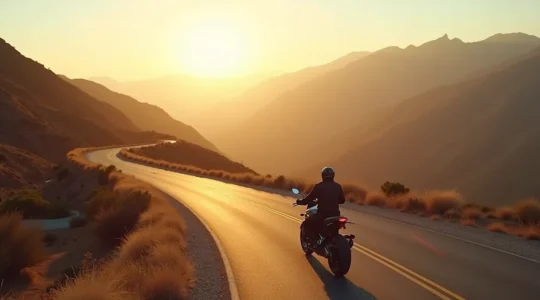
To a non-rider, the sight of a motorcyclist filtering through traffic or leaning into a curve on a mountain road often sparks a single, visceral question: “Why take the risk?” It’s a fair question. Stripped of the steel cage, airbags,…
Read more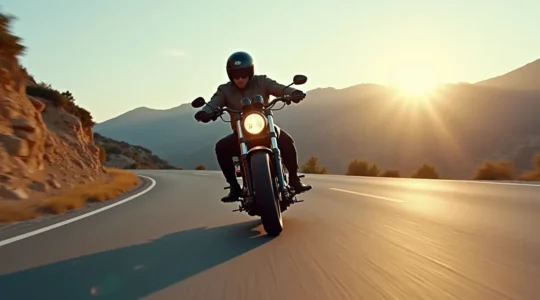
Scraping pegs on your new cruiser is a sign your sportbike muscle memory is fighting the bike’s design, not a lack of skill. Cruisers require a “Captain” mindset (steering from above) versus a sportbike “Pilot” mindset (becoming one with the…
Read more
The optimal motorcycle insurance deductible is not a single number, but a calculated result of your bike’s value, your riding behavior, and the specific coverage type. For bikes valued under $5,000, collision coverage often becomes mathematically inefficient; self-insuring the risk…
Read more
The key to surviving a motorcycle accident financially isn’t just having insurance, but knowing how to strategically manage it as a complete recovery system. Immediate medical evaluation and meticulous documentation are the non-negotiable foundation for maximizing your claim’s value. Coverages…
Read more
Relying on state-minimum motorcycle insurance is not a safety net; it is a direct path to financial catastrophe. Your policy limits are often exhausted by the initial costs of a moderate accident, leaving you personally liable for hundreds of thousands…
Read more
For a motorcycle under $5,000, focusing only on the bike’s value to decide on insurance is a critical mistake; the real question is your total ‘cost of risk’. Standard policies often undervalue or completely ignore expensive aftermarket parts and riding…
Read more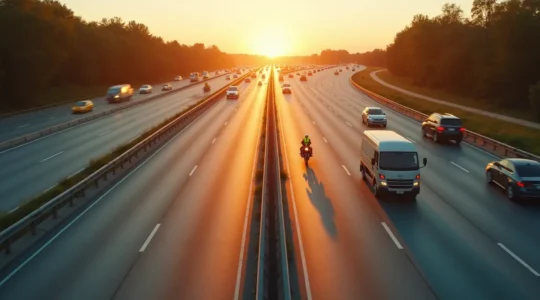
Navigating the legal gray area of lane splitting and filtering requires more than knowing the statute; it demands a deep understanding of risk management and non-verbal communication with other drivers. The critical safety factor isn’t your absolute speed, but maintaining…
Read more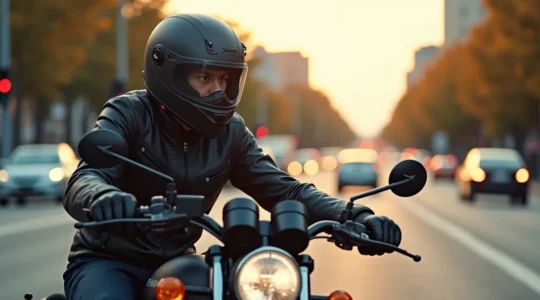
Relying solely on your mirrors is not just a bad habit; it’s a systemic failure in your observation protocol that makes accidents inevitable. Mirrors create a false sense of security by distorting distance and hiding vehicles in significant blind spots….
Read more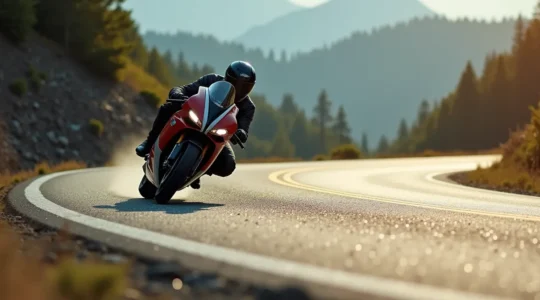
That sudden flash of gravel in a corner triggers a panic response that makes you chop the throttle and grab the brakes—the worst possible reaction. This guide teaches you how to override those flawed survival instincts. By applying counter-intuitive techniques…
Read more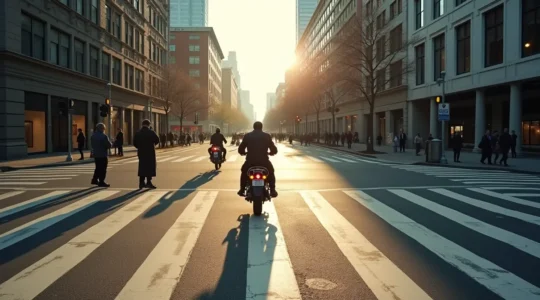
That heart-stopping moment when a pedestrian steps out from behind a truck is a common fear for urban riders. The solution isn’t just faster reflexes, but a shift in mindset. This guide moves beyond generic advice, teaching you to become…
Read more